
From Harvey to Hail: Understanding Houston’s Battle with Storm Damage
Why Flood Damage Houston Remains a Critical Concern for Homeowners
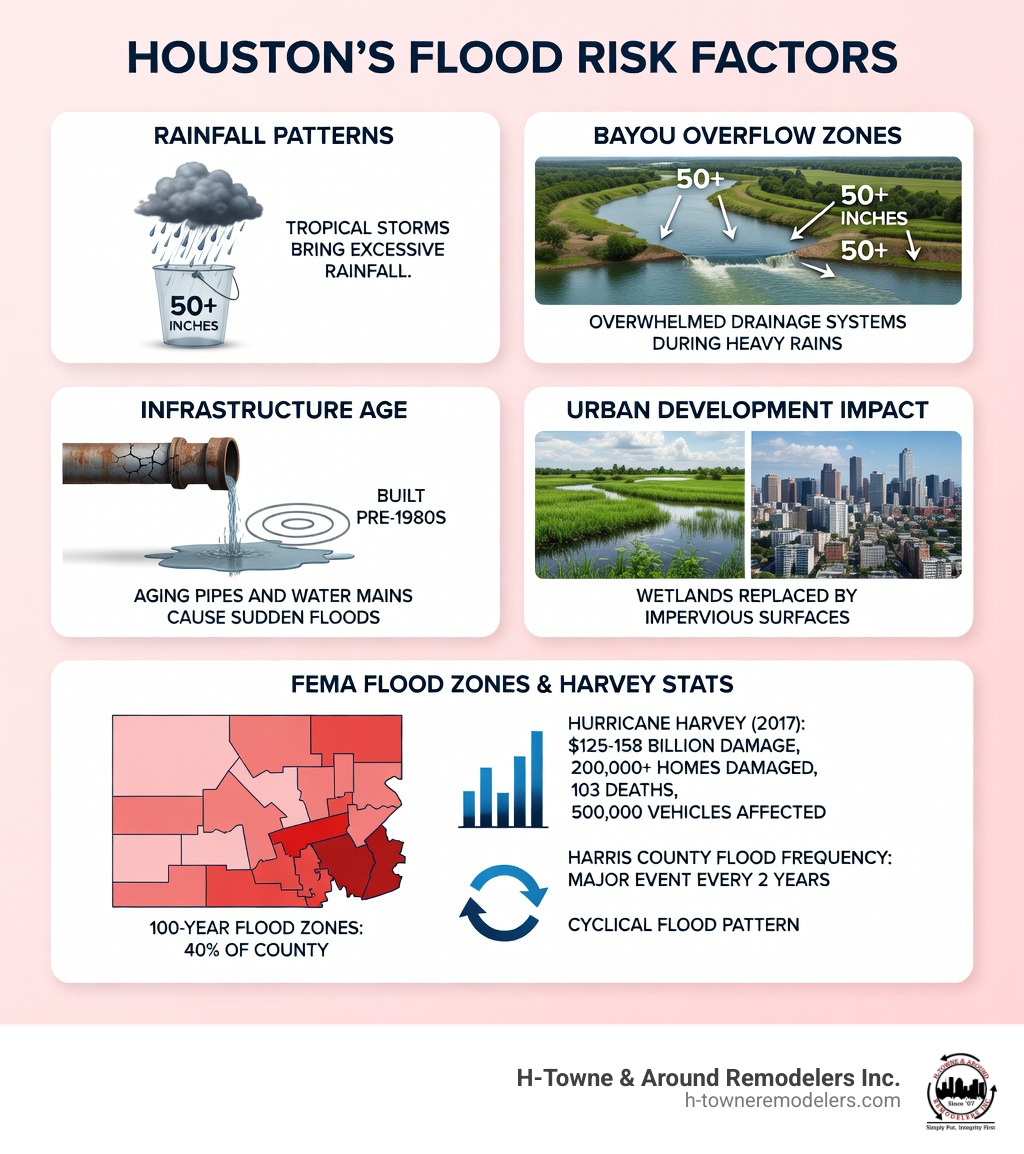
Flood damage Houston is a persistent threat that affects hundreds of thousands of homes and businesses across the Gulf Coast region. Whether from catastrophic hurricanes like Harvey or infrastructure failures like the 2026 Kingwood water main break, flooding remains the most destructive natural disaster facing Harris County residents.
Key Facts About Houston Flood Damage:
- Hurricane Harvey (2017): Caused $125-158 billion in damages, destroyed or damaged 200,000+ homes, displaced 30,000 people, and resulted in 103 deaths in Texas
- Flooding Frequency: Major floods occur in Harris County approximately every two years, often in areas developed before modern flood regulations
- Recovery Rate: 82% of affected Houston households reported complete or mostly complete recovery five years after Harvey
- Infrastructure Risks: Water main breaks and aging infrastructure can cause sudden neighborhood flooding, as seen in Kingwood’s February 2026 incident
- Economic Impact: Harvey reduced U.S. refining capacity by 12% and damaged 300,000 structures and 500,000 vehicles in Texas alone
Houston’s unique geography—low elevation, proximity to the Gulf, rapid urban development replacing natural wetlands—makes it exceptionally vulnerable to flooding. The city experiences everything from tropical storm rainfall exceeding 50 inches to sudden street flooding from infrastructure failures. Understanding these risks is the first step toward protecting your home and family.
The reality is stark: everyone in Houston lives in a flood zone, regardless of proximity to water. Harris County’s flat terrain and heavy rainfall patterns mean that flooding can strike anywhere, anytime. Since Hurricane Harvey in 2017, the region has invested $2.5 billion in flood control infrastructure, yet challenges persist as climate patterns shift and urban development continues.
I’m JR Smith, founder of H-Towne & Around Remodelers, and over my 20+ years in construction, I’ve helped countless Houston families rebuild after experiencing devastating flood damage Houston has thrown their way. From Harvey-ravaged homes to sudden infrastructure failures, our team understands both the immediate crisis and the long-term solutions needed to protect your investment.
The Anatomy of Flood Damage Houston
To understand flood damage Houston, we have to look at the “perfect storm” of conditions that exist in our area. Our region is defined by flat coastal plains and a complex network of bayous that act as the city’s primary drainage veins. When these veins are overwhelmed, the result is catastrophic.
The causes of flooding in our communities—from Katy to The Woodlands and down to Sugar Land—generally fall into two categories: natural disasters and infrastructure failures. While hurricanes grab the headlines, even a “steady, soaking rainstorm” can lead to significant property loss. Natural disasters are often amplified by our environment; for instance, as urban development replaces native prairies and wetlands with impervious concrete, there is simply nowhere for the water to go but into our streets and living rooms.
The Legacy of Hurricane Harvey
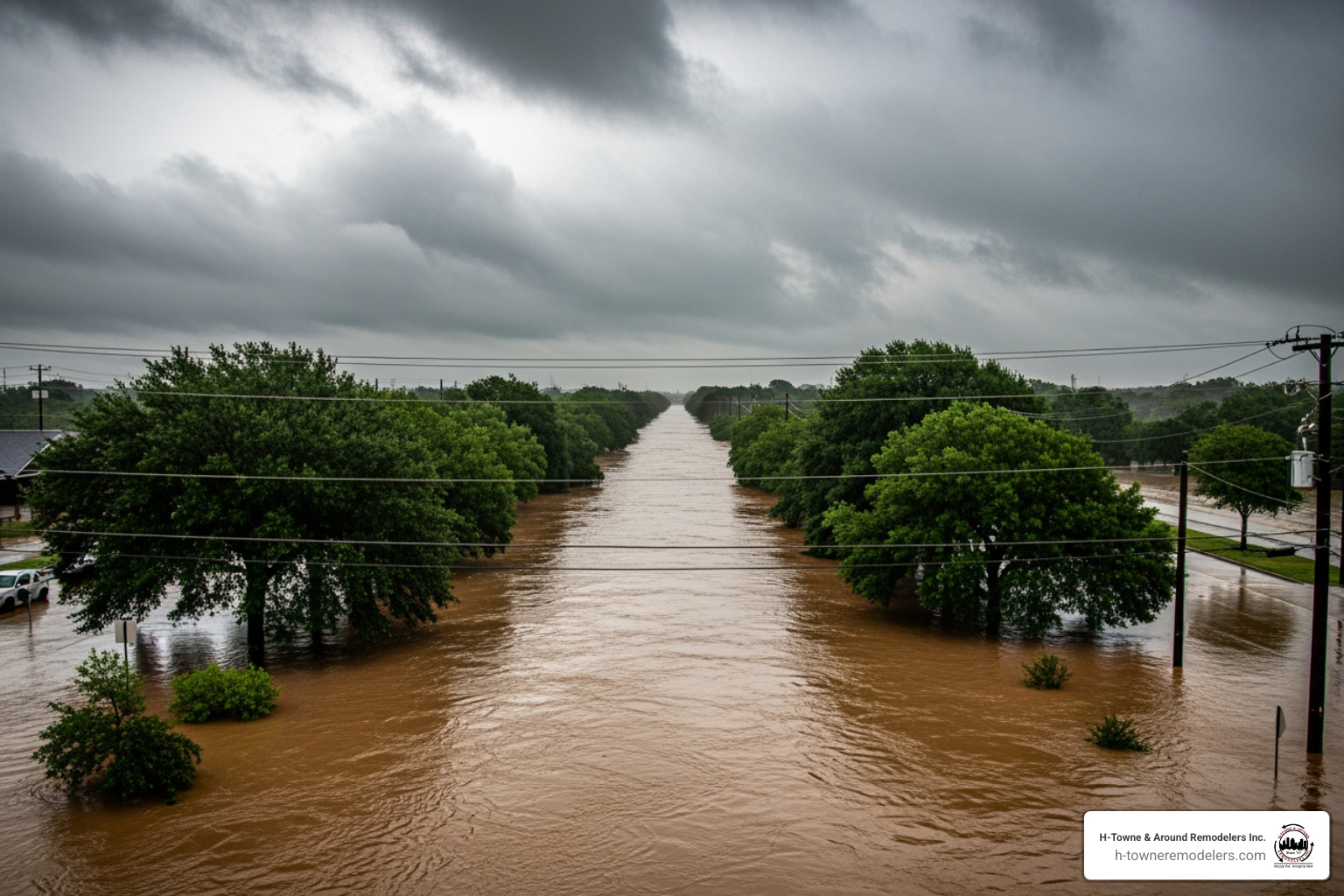
Seven years ago, on August 25, 2017, Hurricane Harvey changed the landscape of our city forever. It was the first Category 4 storm to strike the Texas coast since Hurricane Celia in 1970. Making landfall near Rockport with sustained winds of 130 miles per hour, the storm eventually stalled over Southeast Texas.
The numbers are still hard to process. Harvey dumped more than 50 inches of rain in some areas, making it the wettest tropical cyclone on record in the United States. In terms of property destruction, Harvey damaged or destroyed more than 200,000 homes or businesses and displaced more than 30,000 people.
The human toll was equally devastating, with 103 deaths in Texas, 68 of which were direct results of flooding. Economically, the sheer scale of the disaster was staggering. Harvey caused an estimated $158.8 billion (CPI adjusted) in damages, making it the second-most costly hurricane in U.S. history, trailing only Hurricane Katrina.
Infrastructure Failures and the 2026 Kingwood Incident
Not all flood damage Houston residents face comes from the sky. Our aging infrastructure presents a constant risk of localized flooding. A prime example occurred on February 10, 2026, in the Kingwood neighborhood of Woodland Hills Village.
An apparent water main break at Round Spring Drive and Woodland Grove Drive turned suburban streets into rivers in minutes. Eyewitnesses described the water “rushing” with such force that it lifted grass in sheets, spreading rapidly into yards and threatening home interiors. This incident highlights a critical lesson: even if you aren’t in a high-risk hurricane zone, a single pipe failure can cause thousands of dollars in damage. City crews eventually shut off the flow, but for many residents, the anxiety of potential mold and structural damage remained long after the water receded.
The Economic Reality of Flood Damage Houston
The financial burden of flooding in Houston is immense and multifaceted. When we talk about $125 billion to $158 billion in total damage, we aren’t just talking about drywall and flooring. We are talking about a massive hit to the “energy engine” of the United States.
During major floods, refineries often shut down to protect personnel and equipment. Harvey, for example, reduced Gulf of Mexico oil production by 21% and knocked over 2.25 million barrels per day of U.S. refining capacity offline. This leads to immediate spikes in gasoline prices and localized shortages that affect every resident’s wallet.
Furthermore, there is a significant gap between insured and uninsured losses. Research shows that most homeowners’ insurance policies do not cover flooding. You need a separate policy through the National Flood Insurance Program (NFIP). Alarmingly, 40% of NFIP flood claims occur outside of high-risk areas, yet many residents in these “low-risk” zones remain uninsured.
Comparison of Major Houston Floods
| Event | Year | Rainfall Peak | Total Est. Damage (Adjusted) |
|---|---|---|---|
| Hurricane Harvey | 2017 | 60.58 inches | $158.8 Billion |
| Tropical Storm Allison | 2001 | 40+ inches | $9+ Billion |
| Hurricane Ike | 2008 | 19+ inches | $38+ Billion |
Using Flood Inundation Maps to Predict Flood Damage Houston
One of the best ways we can prepare is by understanding our specific risk. Tools like FEMA’s Flood Map Service Center allow you to enter your address to see if you are in a Special Flood Hazard Area (SFHA).
Inundation maps help us assess risk by categorizing potential flood depths. These maps often use water level indicators to show depth ranges:
- <1.0 ft: Nuisance flooding, likely street-level only.
- 1.0-3.0 ft: Dangerous; water enters most standard-foundation homes.
- 3.0-6.0 ft: Severe; major structural damage and risk to life.
- >6.0 ft: Catastrophic; total loss of lower floors.
For residents in areas like Kingwood or Cypress Creek, monitoring these maps and the Harris County Flood Warning System is essential during heavy rain events.
Long-Term Recovery Statistics
Recovery is a marathon, not a sprint. According to the Hobby School of Public Affairs at the University of Houston, which conducted a five-year study on The Impact of Hurricane Harvey, 82% of affected households reported being completely or mostly recovered five years later.
However, the “mostly” in that statistic hides some hard truths. Vulnerable populations and those without flood insurance faced significantly slower recovery paths. The study found that 31.1% of those who fully recovered had flood insurance, compared to only 18.5% of those who had not recovered. This highlights that financial preparedness is just as important as physical restoration.
Mitigation Strategies and Community Resilience
In the years following Harvey, we’ve seen a massive shift in how Houston approaches flood prevention. The Harris County Flood Control District (HCFCD) has been at the forefront, utilizing a $2.5 billion bond program approved by voters in 2018.
The strategy is no longer just about “getting the water out” but about “making room for the water.” This includes:
- New Reservoirs and Detention Basins: Creating massive areas to hold excess water and release it slowly.
- Home Elevation: Physically lifting homes above the Base Flood Elevation (BFE).
- Floodplain Restrictions: Implementing stricter building codes, such as requiring new homes to be liftd 24 inches above the 500-year flood level.
- Wetland Preservation: Protecting the native prairies that act as natural sponges.
Harris County Flood Control District Measures
The HCFCD maintains over 2,500 miles of channels across our watersheds, from Buffalo Bayou to White Oak Bayou. Their mission is to reduce flood risk through both structural tools (like larger channels) and non-structural tools (like voluntary home buyouts).
If you experience flooding in your home, it is vital to Report House Flooding to the district. This data helps them identify which areas need the most urgent infrastructure improvements. Community preparedness has also evolved; residents are now more likely to stockpile supplies and have evacuation plans ready well before hurricane season begins.
Professional Restoration and Flood Damage Houston Prevention
When the unthinkable happens and water enters your home, the clock starts ticking. Mold can begin to grow in less than 24 hours. Professional restoration is about more than just drying out the carpet; it’s about ensuring the structural integrity of your home is preserved.
At H-Towne & Around Remodelers, we believe that every repair is an opportunity to build back better. This might mean replacing damaged drywall with moisture-resistant materials or reconfiguring your space to move expensive mechanical systems (like your water heater or furnace) to higher ground.
Knowing Property Damage: What to Do Next is crucial. Your first steps should always be:
- Safety First: Ensure the power is off before entering standing water.
- Documentation: Take extensive photos and videos of the damage for insurance.
- Mitigation: Remove wet materials like carpet and drywall (usually up to 12 inches above the water line) to prevent mold spread.
- Professional Assessment: Get a detailed, itemized cost estimate from a licensed contractor.
Frequently Asked Questions about Houston Flooding
What were the primary causes of the 2026 Kingwood flood?
The 2026 Kingwood flood was caused by a major water main break at the intersection of Round Spring Drive and Woodland Grove Drive. Unlike hurricane flooding, this was an infrastructure failure that sent high-pressure water into streets and yards, lifting grass in sheets and threatening homes in the Woodland Hills Village area.
How many homes were affected by Hurricane Harvey in Texas?
Hurricane Harvey had a staggering impact, damaging or destroying more than 200,000 homes and businesses across Texas. Within Harris County alone, tens of thousands of structures were inundated, many of which were located outside of traditional 100-year floodplains.
What tools can I use to check my home’s flood risk?
Residents can use several reliable tools:
- FEMA Flood Map Service Center: The official source for flood zone designations.
- Harris County Flood Warning System: Real-time rain gauge and bayou level monitoring.
- Private Risk Tools: Companies like ClimateCheck and First Street provide property-specific risk assessments based on historical data and future climate projections.
Conclusion
The battle with flood damage Houston residents face is a shared one. From the lessons learned during the “500-year” floods of the past decade to the resilience shown in the face of sudden infrastructure failures like in Kingwood, our community continues to evolve. We are no longer a city that simply reacts to storms; we are a city that plans for them.
Resilience is built through a combination of smart policy, community preparedness, and quality restoration. Whether you are in Katy, The Woodlands, or the heart of the Heights, protecting your home requires a proactive approach.
At H-Towne & Around Remodelers Inc., we are proud to be part of the solution. Our multi-generational team of licensed and insured tradesmen brings decades of experience to every project. We don’t just fix what’s broken; we help you renovate and remodel your home to be stronger and more resilient for the future. If you’re ready to transform your home and protect it from whatever the Gulf throws our way next, we’re here to help.
Need help navigating the aftermath of storm damage or looking to upgrade your home’s resilience? Contact us at H-Towne & Around Remodelers Inc. today for expert Storm and Flood Damage Restoration and Home Restoration Services When You Need It. From General Remodeling to complete House Renovation, our team is dedicated to serving our neighbors in Houston TX and beyond.